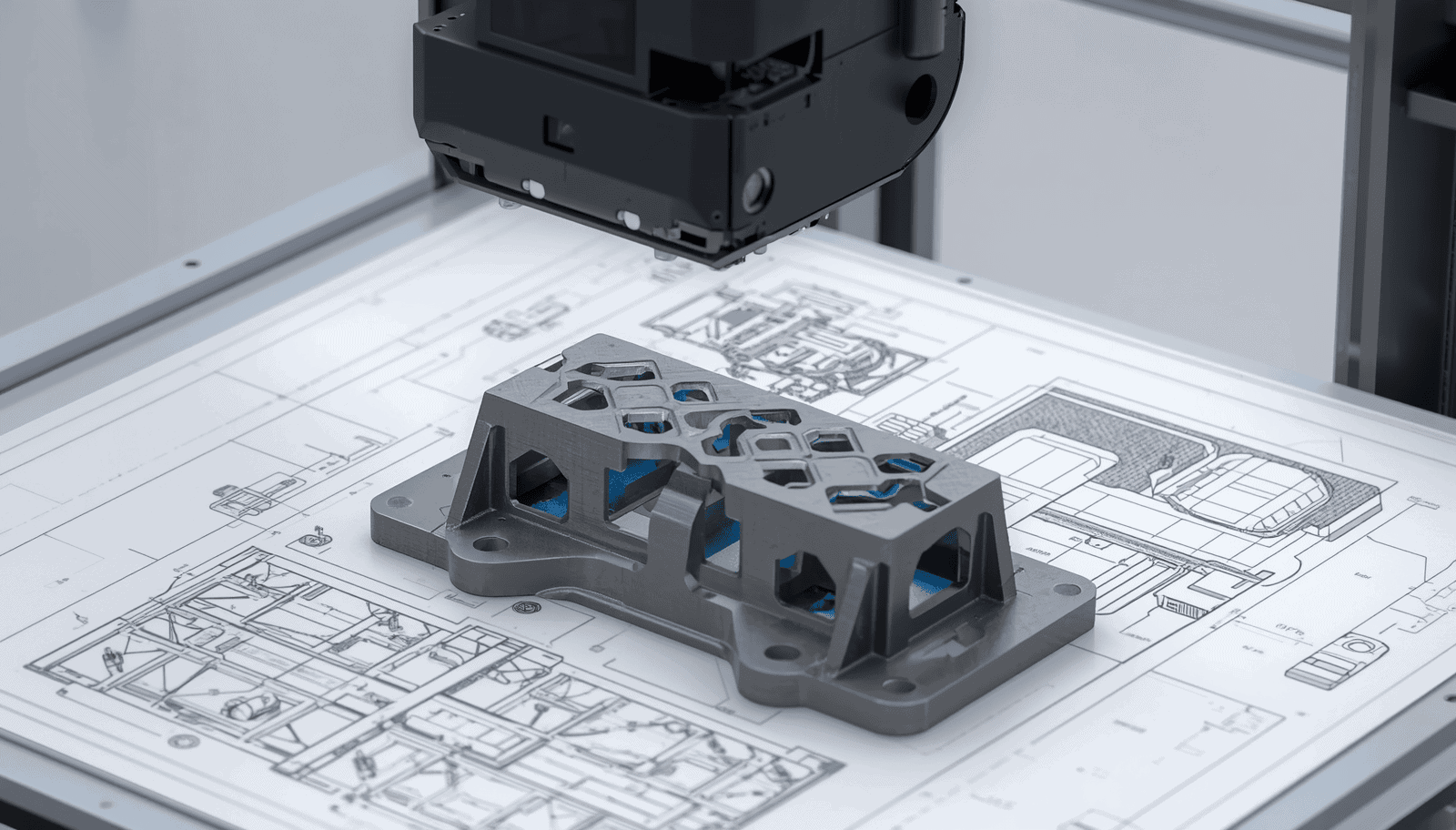
Designing for Additive Manufacturing: Techniques for Optimizing 3D Printed Parts
Additive manufacturing has transformed how engineers approach product development. What began as a rapid prototyping tool has evolved into a viable production method for industries ranging from aerospace and automotive to medical devices and consumer products.
Unlike traditional manufacturing processes that remove material from a workpiece or form parts using molds and tooling, additive manufacturing builds components layer by layer. This approach offers unprecedented design freedom, allowing engineers to create complex geometries that would be difficult or impossible to produce through conventional methods.
However, maximizing the benefits of additive manufacturing requires a different design mindset. Design for Additive Manufacturing (DfAM) focuses on optimizing parts specifically for 3D printing processes, helping engineers improve performance, reduce costs, and streamline production.
What Is Design for Additive Manufacturing (DfAM)?
Design for Additive Manufacturing (DfAM) is an engineering methodology that adapts product designs to take advantage of additive manufacturing technologies while accounting for their unique constraints.
Rather than designing a component for machining, casting, or molding and then attempting to print it, DfAM encourages engineers to develop parts with additive manufacturing in mind from the beginning.
This approach allows designers to leverage benefits such as:
- Increased design freedom
- Complex internal geometries
- Lightweight structures
- Part consolidation
- Reduced material waste
- Faster prototyping and iteration
By understanding the capabilities and limitations of additive manufacturing processes, engineers can create parts that are both functional and efficient to produce.
Why Traditional Design Rules Don’t Always Apply
Many design practices developed for conventional manufacturing processes are driven by tooling and machining constraints.
For example:
- Injection-molded parts often require draft angles.
- Machined components need tool access.
- Castings require parting lines and mold considerations.
- Welded assemblies may consist of multiple manufactured components.
Additive manufacturing removes many of these restrictions. Engineers can often create highly complex geometries without additional tooling costs.
However, additive manufacturing introduces its own set of considerations, including:
- Build orientation
- Support structures
- Layer adhesion
- Surface finish requirements
- Material behavior
- Post-processing needs
Successful DfAM requires balancing these factors throughout the design process.
Optimize Build Orientation
Build orientation is one of the most important decisions when designing a part for additive manufacturing.
The way a component is positioned during printing can significantly affect:
- Mechanical strength
- Surface quality
- Print time
- Material usage
- Support requirements
For many additive manufacturing processes, parts exhibit anisotropic properties, meaning strength can vary depending on the direction of the printed layers.
Orienting a part to align critical load paths with stronger material directions can improve performance and durability. At the same time, thoughtful orientation can minimize support structures and reduce overall production costs.
Evaluating multiple build orientations early in the design process often leads to better manufacturing outcomes.
Minimize Support Structures
Many additive manufacturing technologies require temporary support structures to stabilize overhanging features during printing.
While supports may be necessary, they often increase:
- Material consumption
- Print duration
- Post-processing labor
- Surface finishing requirements
Designers can reduce support requirements by incorporating self-supporting geometries and selecting favorable build orientations.
Common strategies include:
- Limiting steep overhangs
- Using angled surfaces instead of horizontal projections
- Splitting complex assemblies into multiple components when appropriate
- Reorienting parts to reduce unsupported features
Minimizing supports can improve efficiency while reducing overall manufacturing costs.
Leverage Part Consolidation
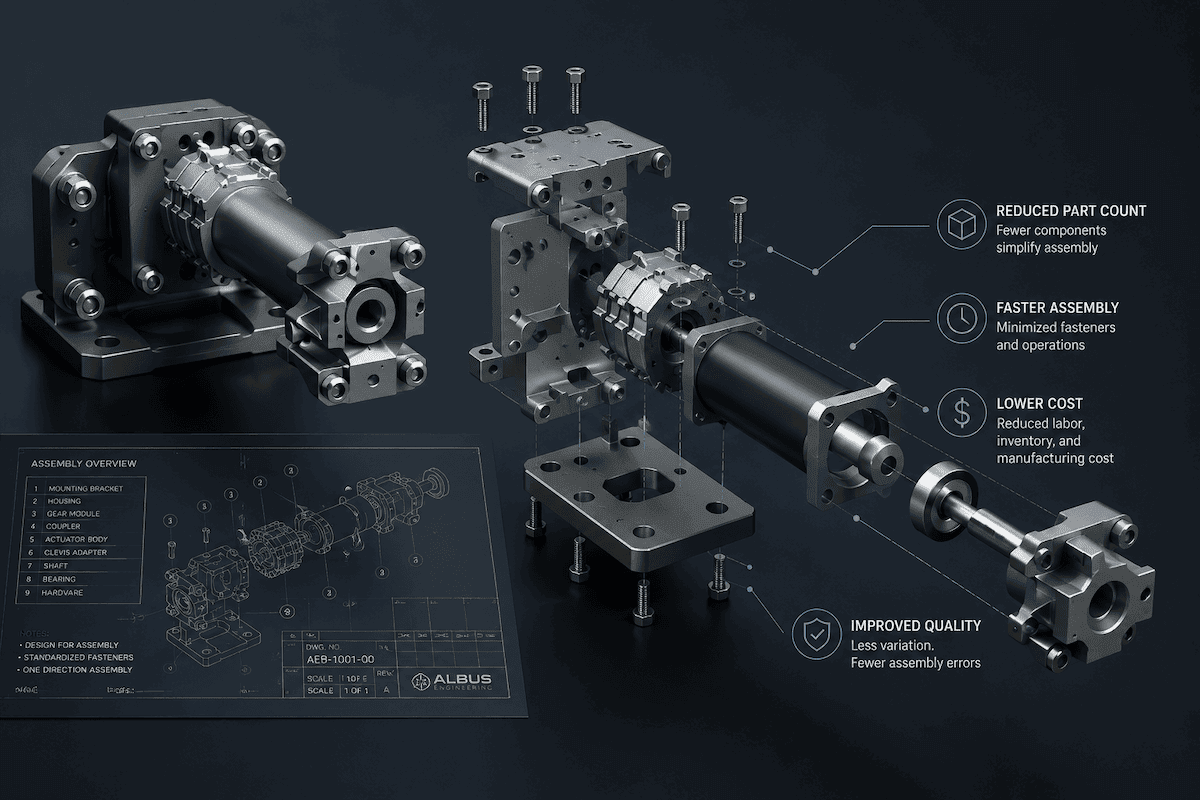
One of the most powerful advantages of additive manufacturing is the ability to combine multiple components into a single printed part.
Traditional manufacturing methods often require assemblies consisting of numerous individual components, fasteners, and joining operations.
With additive manufacturing, engineers may be able to integrate multiple functions into a single component.
Benefits of part consolidation include:
- Reduced assembly time
- Lower inventory requirements
- Fewer potential failure points
- Improved reliability
- Simplified supply chains
This concept aligns closely with Design for Manufacturing and Assembly (DFMA) principles, which focus on reducing complexity and improving production efficiency.
Utilize Lightweight Structures and Topology Optimization
Additive manufacturing enables the use of advanced internal structures that would be difficult or impossible to create using traditional manufacturing methods.
Engineers can leverage:
- Lattice structures
- Cellular geometries
- Topology-optimized designs
- Organic load-path-driven shapes
These techniques help reduce weight while maintaining structural performance.
Lightweighting is particularly valuable in industries such as:
- Aerospace
- Automotive
- Robotics
- Medical devices
Reducing component weight can improve efficiency, lower material usage, and enhance overall product performance.
When combined with engineering analysis tools such as Finite Element Analysis (FEA), these design techniques can produce highly optimized components tailored to specific loading conditions.
Design for Material Behavior
Material selection plays a critical role in additive manufacturing success.
Different additive manufacturing technologies use a variety of materials, including:
- Thermoplastics
- Photopolymers
- Metal powders
- Composite materials
Each material exhibits unique mechanical and thermal properties that influence design decisions.
Engineers must account for factors such as:
- Thermal distortion
- Shrinkage
- Residual stresses
- Layer adhesion
- Surface finish characteristics
Understanding material behavior early in development helps prevent unexpected performance issues and improves manufacturing consistency.
Plan for Post-Processing
Although additive manufacturing can reduce production complexity, printed parts often require additional processing before they are ready for use.
Depending on the application, post-processing may include:
- Support removal
- Surface finishing
- Machining critical features
- Heat treatment
- Inspection and testing
Designers should consider these requirements during the initial design phase.
Providing access to critical surfaces and maintaining appropriate machining allowances can simplify post-processing operations and improve final part quality.
Common DfAM Mistakes to Avoid
Engineers who are new to additive manufacturing often make the mistake of treating printed parts like conventionally manufactured components.
Some common pitfalls include:
- Ignoring build orientation
- Overusing support structures
- Designing walls that are too thin
- Neglecting material-specific limitations
- Failing to account for post-processing
- Missing opportunities for part consolidation
Addressing these issues early can improve print success rates and reduce costly design revisions.
How DfAM Improves Product Development
When applied effectively, Design for Additive Manufacturing can accelerate product development while improving overall product performance.
Key benefits include:
- Faster prototyping cycles
- Greater design flexibility
- Reduced material waste
- Lower assembly complexity
- Improved product performance
- Shorter development timelines
As additive manufacturing technologies continue to evolve, DfAM is becoming an increasingly important skill for engineers seeking to develop innovative, production-ready products.
By designing specifically for additive manufacturing rather than adapting traditional designs after the fact, organizations can unlock the full potential of 3D printing technologies.
Partner with Albus Engineering for Manufacturing-Focused Design Support
Successful product development requires more than creating functional designs—it requires understanding how those designs will be manufactured.
At Albus Engineering, we help clients develop optimized mechanical designs that balance performance, manufacturability, and production efficiency. Through CAD modeling, engineering analysis, product development support, and manufacturing-focused design practices, we help organizations reduce risk and accelerate development.
Whether you’re exploring additive manufacturing for prototyping or production applications, our engineering expertise can help you make informed design decisions that improve results.
Contact Albus Engineering to discuss your next project. From mechanical design and analysis to technical documentation, our team delivers precise and reliable support at every stage of development. Explore our services to learn more.
Share This Story, Choose Your Platform!
About the author : Albus Content Team