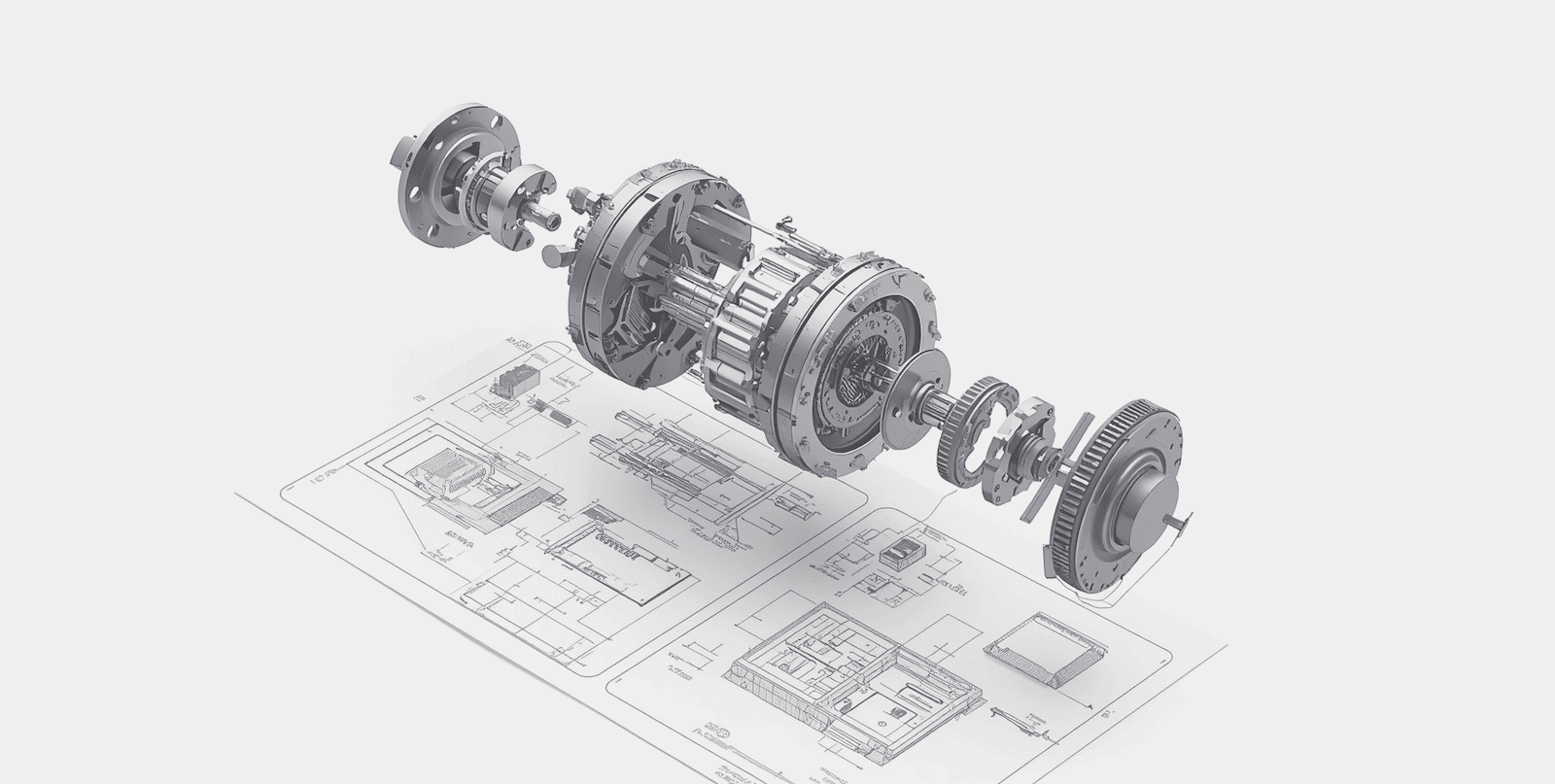
Design for Manufacturing and Assembly (DFMA): Why It’s Crucial for Product Success
Bringing a product from concept to production requires more than a functional design. Engineers must also consider how efficiently a product can be manufactured and assembled. A design that performs well on paper can become costly, difficult to build, or prone to quality issues if manufacturing and assembly requirements are overlooked.
Design for Manufacturing and Assembly (DFMA) is an engineering methodology that addresses these challenges early in the product development process. By optimizing designs for production and assembly, companies can reduce costs, improve quality, shorten development timelines, and create products that are easier to manufacture at scale.
What Is Design for Manufacturing and Assembly (DFMA)?
Design for Manufacturing and Assembly (DFMA) combines two complementary engineering approaches:
- Design for Manufacturing (DFM): Focuses on simplifying the manufacturing process by selecting appropriate materials, manufacturing methods, and part geometries.
- Design for Assembly (DFA): Focuses on reducing assembly complexity by minimizing part counts and simplifying assembly operations.
Together, these methodologies help engineers create products that are both cost-effective to produce and efficient to assemble.
Rather than treating manufacturing and assembly as separate stages that occur after design completion, DFMA encourages engineers to consider production requirements throughout the design process.
Why DFMA Matters in Product Development
Many product development challenges can be traced back to design decisions made early in a project. Features that seem beneficial during the design phase may increase manufacturing costs, require specialized tooling, or create assembly difficulties once production begins.
Implementing DFMA principles helps teams identify these issues before they become expensive problems.
Key benefits of DFMA include:
- Reduced manufacturing costs
- Lower assembly labor requirements
- Improved product quality
- Faster production cycles
- Fewer engineering change orders
- Shorter time-to-market
- Improved product reliability
By addressing manufacturability and assembly concerns early, organizations can avoid costly redesigns and production delays later in the project lifecycle.
Design for Manufacturing (DFM) Principles
Design for Manufacturing focuses on creating parts that can be produced efficiently using available manufacturing processes.
Several core principles guide DFM efforts.
Simplify Part Geometry
Complex geometries often increase machining time, tooling requirements, and production costs. Engineers should strive to eliminate unnecessary features and simplify part designs whenever possible.
Examples include:
- Reducing sharp internal corners
- Minimizing complex surface features
- Avoiding unnecessary tight tolerances
- Standardizing hole sizes and feature dimensions
Simpler parts are generally easier and less expensive to manufacture.
Select Appropriate Materials
Material selection directly impacts manufacturing methods, cost, performance, and lead times.
When selecting materials, engineers should evaluate:
- Mechanical requirements
- Environmental conditions
- Availability
- Manufacturing compatibility
- Cost
Choosing readily available materials can reduce procurement risks and production delays.
Minimize Tight Tolerances
While tight tolerances may improve precision, they often increase manufacturing costs significantly.
Engineers should apply tight tolerances only where functional requirements demand them and allow standard tolerances elsewhere.
This approach reduces machining complexity while maintaining product performance.
Consider Manufacturing Processes Early
Different manufacturing processes have unique design constraints.
For example:
- Injection molding requires draft angles and consistent wall thicknesses.
- CNC machining may require tool access considerations.
- Sheet metal fabrication benefits from standardized bend radii.
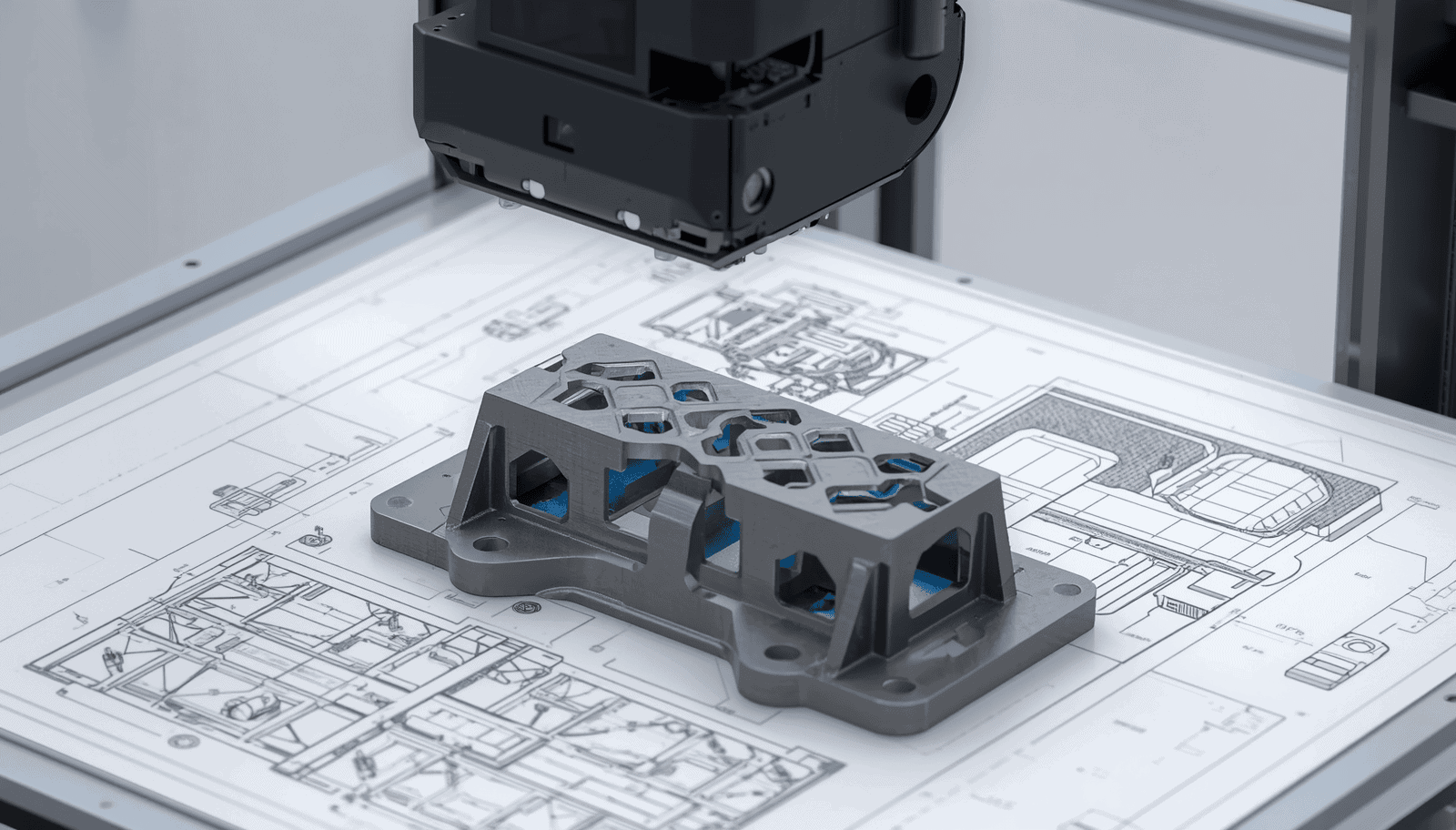
- Additive manufacturing introduces opportunities and limitations related to support structures and build orientation.
Understanding these requirements early helps prevent costly redesigns.
Design for Assembly (DFA) Principles
While DFM focuses on producing individual parts efficiently, DFA focuses on assembling those parts into a finished product.
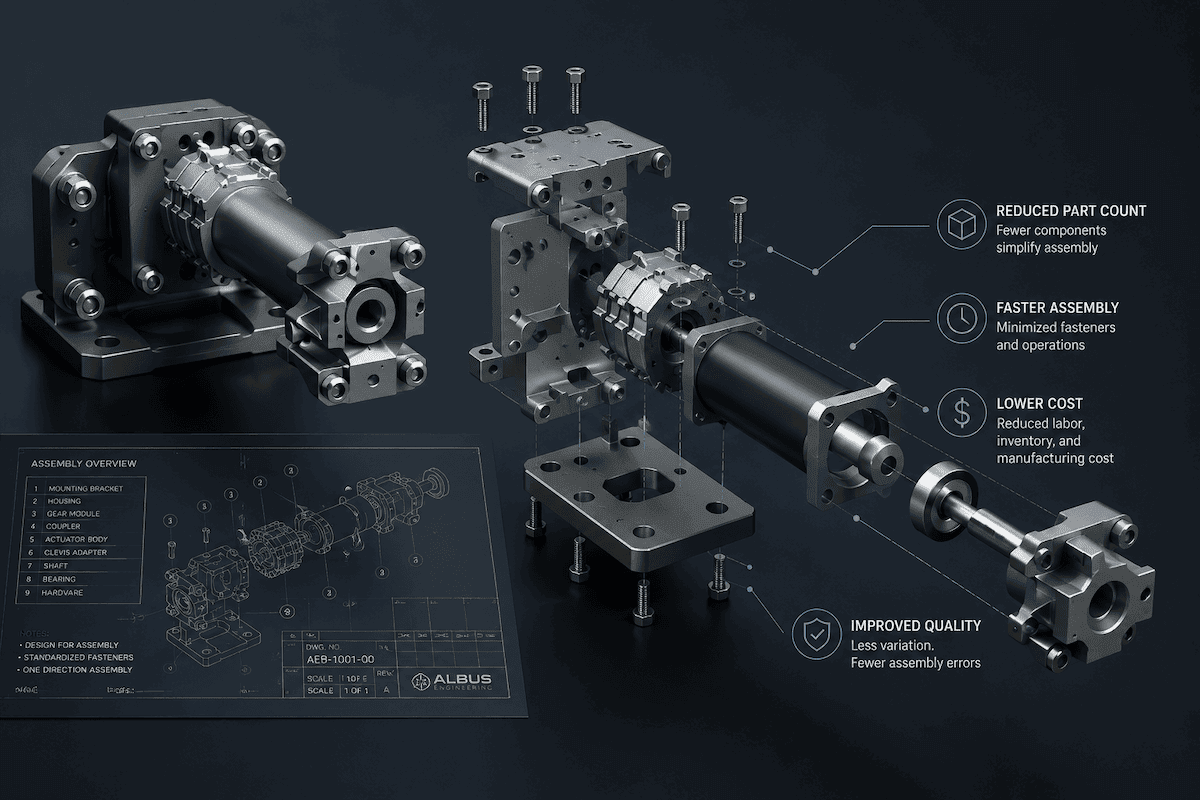
Reduce Part Count
One of the most effective ways to improve assembly efficiency is to reduce the total number of components.
Benefits include:
- Fewer assembly operations
- Lower inventory requirements
- Reduced procurement complexity
- Improved reliability
Whenever possible, engineers should evaluate whether multiple components can be combined into a single part.
Standardize Components
Using common fasteners, hardware, and components simplifies both manufacturing and assembly operations.
Standardization can:
- Reduce inventory costs
- Simplify purchasing
- Improve maintenance and serviceability
- Reduce assembly errors
This principle is especially valuable for products produced at higher volumes.
Design for Easy Orientation and Handling
Parts that can only be assembled in one orientation help reduce operator errors and assembly time.
Good assembly design often includes:
- Self-locating features
- Symmetrical components
- Visual alignment aids
- Error-proofing features
These design considerations improve consistency and product quality.
Minimize Fasteners
Fasteners often contribute significantly to assembly labor costs.
Engineers should evaluate alternatives such as:
- Snap-fit connections
- Integrated features
- Press-fit assemblies
- Welded or bonded joints where appropriate
Reducing fastener count can streamline assembly while improving reliability.
How DFMA Reduces Manufacturing Costs
The cost savings associated with DFMA often extend far beyond material reductions.
A well-executed DFMA strategy can reduce:
- Tooling costs
- Manufacturing cycle times
- Assembly labor
- Quality control requirements
- Warranty claims
- Production downtime
Because many manufacturing costs are influenced by design decisions, improvements made during development often generate savings throughout the entire product lifecycle.
Studies have consistently shown that the majority of a product’s lifecycle costs are determined during the design phase, making early DFMA efforts particularly valuable.
DFMA and Product Quality
DFMA is not solely about reducing costs. It also plays a critical role in improving product quality.
Simpler designs typically have:
- Fewer failure points
- Reduced assembly errors
- Improved consistency
- Easier inspection and testing
By minimizing complexity, engineers can create products that are more reliable and easier to manufacture consistently.
This often leads to improved customer satisfaction and lower long-term support costs.
When Should DFMA Be Applied?
The greatest benefits occur when DFMA principles are incorporated early in product development.
Ideally, DFMA reviews should occur during:
- Concept development
- Preliminary design
- Detailed design reviews
- Prototype development
Waiting until production begins often limits the opportunities for meaningful improvements and increases the cost of design changes.
Cross-functional collaboration between engineering, manufacturing, quality, and supply chain teams is essential for successful DFMA implementation.
Partner with Albus Engineering for Smarter Product Development
Successful products require more than innovative ideas. They require designs that can be manufactured and assembled efficiently.
At Albus Engineering, we help companies optimize designs for performance, manufacturability, and production efficiency. Through mechanical design support, CAD modeling, engineering analysis, and product development expertise, we help clients reduce risk and improve outcomes throughout the development process.
Whether you’re developing a new product or refining an existing design, incorporating DFMA principles early can lead to significant improvements in cost, quality, and production success.
Contact Albus Engineering to discuss your next product development project. From mechanical design and analysis to technical documentation, our team delivers precise and reliable support at every stage of development. Explore our services to learn more.
Share This Story, Choose Your Platform!
About the author : Albus Content Team